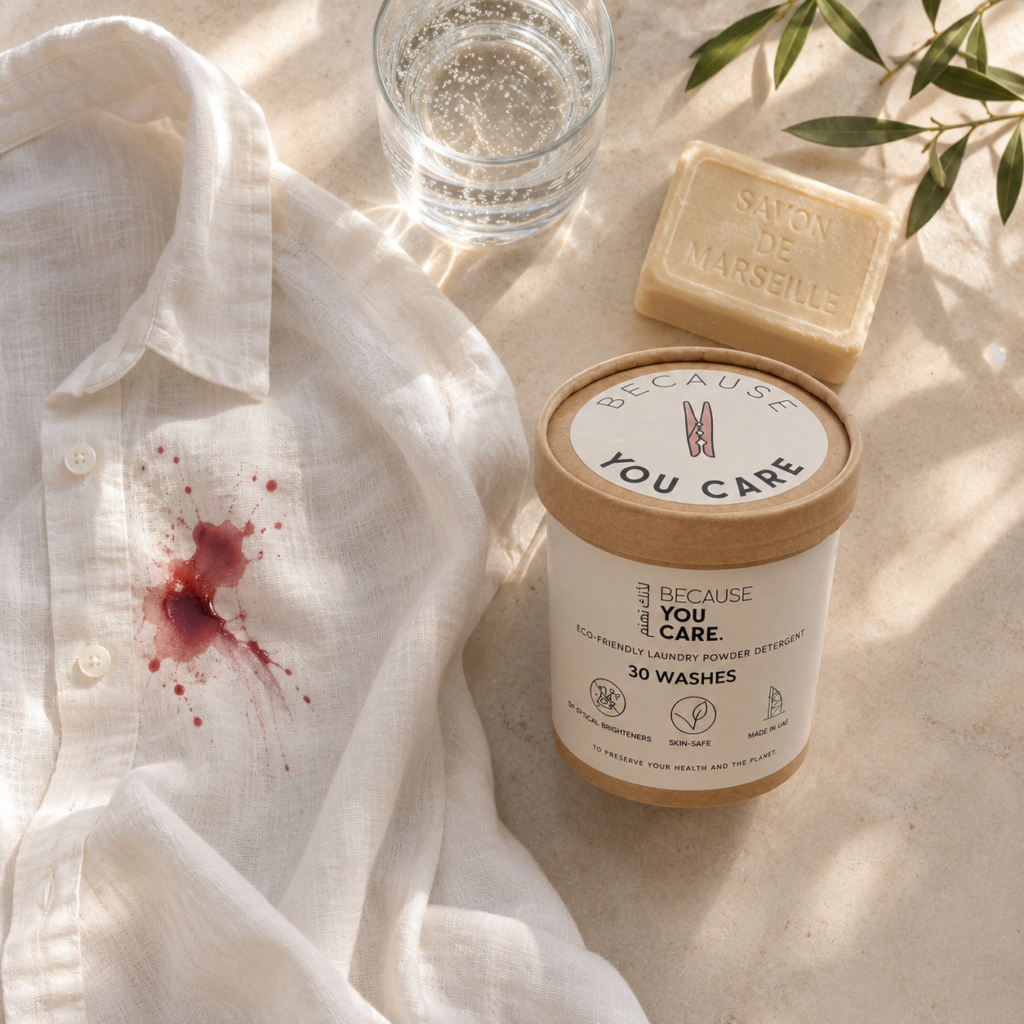
Have you ever made a stain worse by trying to fix it?
A glass of red wine tips over at dinner. A cherry lands on your white linen shirt. Your little one decides tomato sauce looks better on their T-shirt than on the pasta. And in that moment, we all do the same thing: we panic.
We grab hot water. We rub hard. We pour salt because “someone said it works.” And very often, without knowing it, we turn a small accident into a permanent mark.
I’m Olivia, founder of Because You Care, and I’ve spent years testing natural ways to deal with everyday stains. The good news? Most food stains can be saved. You just need the right reflex at the right moment.
Why Food Stains Get Worse
Food stains are tricky because they rarely come alone. A single splash can combine several things at once:
- ›Pigments, like the deep red colour of wine, cherries or strawberries, that quickly sink into the fibres
- ›Fat, like oil, butter or the cocoa butter in chocolate
- ›Proteins and sugars that become sticky and attract even more dirt
Each of these reacts differently to water, heat and rubbing. That’s why a method that works perfectly on one stain can ruin another.
The 4 Mistakes That Set a Stain for Good
Before we talk about what to do, let’s talk about what not to do. These four reflexes are behind most “lost forever” clothes:
1. Using hot water. Heat fixes many stains into the fabric, especially tomato, chocolate, coffee and fruit. When in doubt, always start cold.
2. Rubbing. Rubbing spreads the stain and pushes it deeper. Dab gently instead, from the outside towards the centre.
3. Adding water to grease. Water and oil don’t mix. On a greasy stain, water only spreads the damage.
4. Putting it straight in the dryer. If even a trace of the stain remains, the heat of the dryer will lock it in. Always check before drying.
Avoid these four, and you’ve already won half the battle.
3 Common Food Stains and How to Save Them
Here are three of the stains that make us panic the most, with the natural reflexes I use at home.
Red Wine
The biggest myth? Salt. Many people pour it on immediately, but salt can actually set the colour and make the stain more permanent. Hot water and rubbing do the same.
What to do instead:
- ›Pour sparkling water over the stain straight away. If you can, let the fabric soak in it.
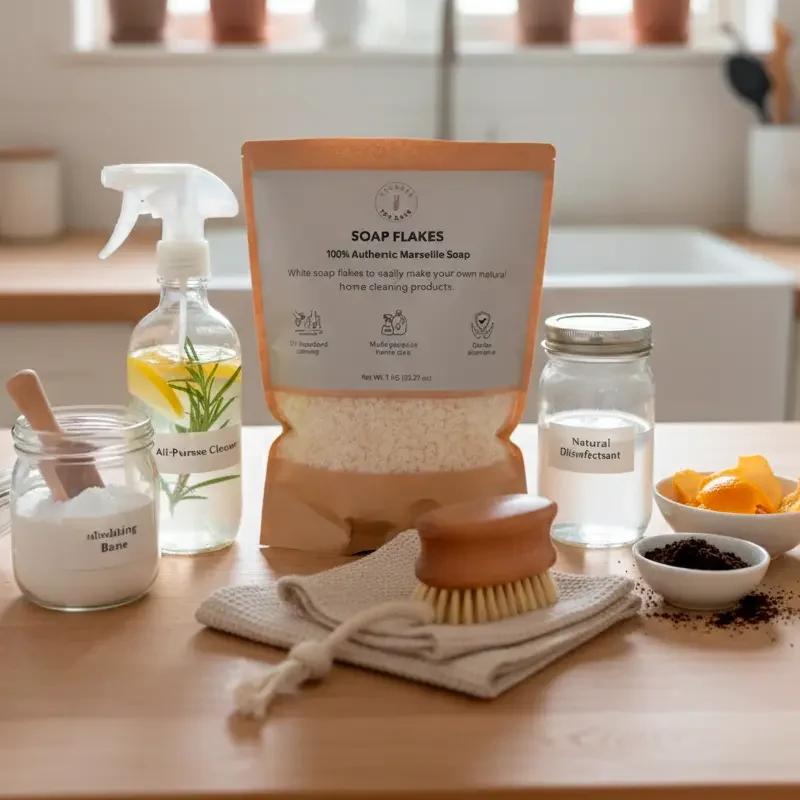
- ›Apply authentic Marseille soap to the area, let it sit, then rinse thoroughly.
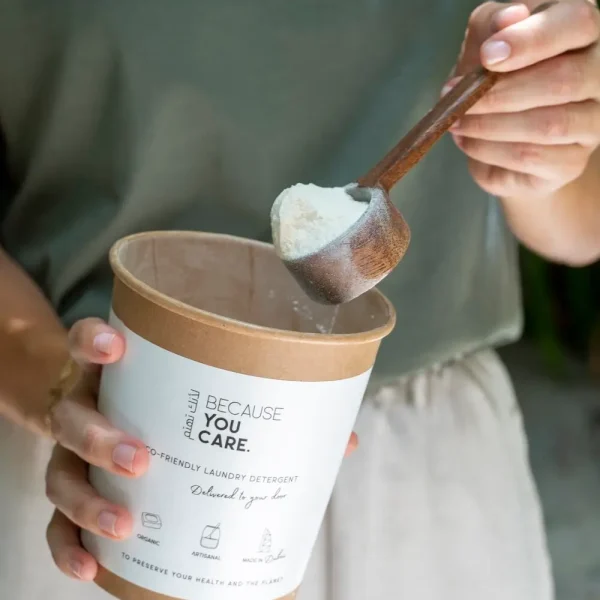
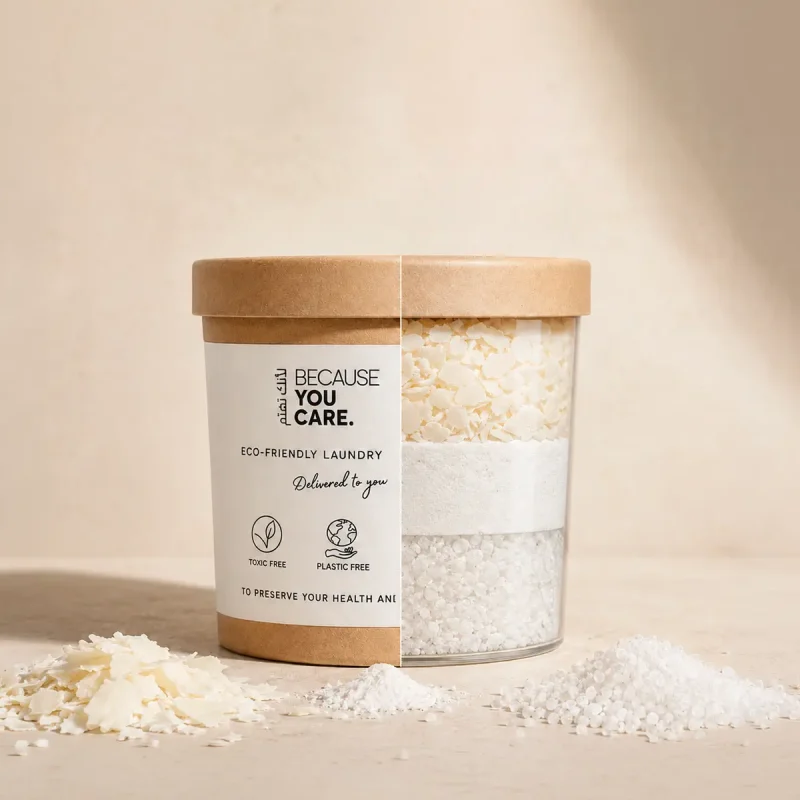
- ›Place the garment in your machine with one tablespoon of Because You Care powder on top.
No sparkling water at hand? A quick sprinkle of talc or flour helps absorb the wine before you treat it.
Cherries
Cherries are among the most staining fruits there are. Their deep red colour comes from natural pigments that penetrate fibres very quickly, and their sugars make the stain sticky. The longer you wait, the harder it gets.
What to do instead:
- ›Act fast, before the stain dries.
- ›Gently scrape off any excess fruit without spreading it.
- ›Apply lemon juice or white vinegar directly to the stain and let it sit for a few minutes.
- ›Rinse with cold water, then wash as usual.
Tomato Sauce
Tomato sauce combines colour and fat, which makes it a classic on kids’ clothes (and on our favourite tops).
What to do instead:
- ›Rinse immediately with cold water, never hot.
- ›Apply soap and work up a gentle lather, without spreading the stain.
- ›Rinse, then machine wash with a spoonful of Because You Care powder.
And here’s a surprising tip: a little cold milk dabbed with a clean cloth works wonders on tomato splashes, even on jeans.
And What About Chocolate, Coffee, Grease or Strawberries?
Each one has its own logic. Grease needs no water at all at first. Chocolate needs to be scraped before anything else. Coffee has its own list of don’ts. Dried stains need a completely different approach than fresh ones. And delicate fabrics like silk, linen or velvet deserve gentler methods.
That’s a lot to remember in a moment of panic. Which is exactly why I created a guide.
Never Panic Again: The Bye-Bye Stains! Guide
I wanted a simple tool that sits in your laundry room and gives you the right answer in seconds. So I gathered all my tested tips in one illustrated guide.
Inside, you’ll find:
- ›Step-by-step methods for the stains we face most: blood, grease, coffee, tomato, chocolate, red wine, ink, cherries and strawberries
- ›Several solutions per stain, so you can use what you already have at home: Marseille soap, white vinegar, baking soda, lemon, milk, sparkling water
- ›Dedicated methods for dried stains and delicate fabrics
- ›The “don’t do” list for each stain, so you never make things worse
- ›A one-page reminder of the right water temperature for every type of stain
No harsh chemicals, no complicated products. Just natural, proven reflexes that protect your clothes, your skin and the planet.
Next time a glass of wine tips over, you won’t panic. You’ll simply open the guide.
Get your Bye-Bye Stains! Quick Guide
Frequently Asked Questions
Should I use hot or cold water on a food stain?
Cold water is the safest starting point for most food stains. Hot water can set pigments and proteins into the fibres for good.
Does salt remove red wine stains?
No. Salt can actually set the colour of wine into the fabric. Sparkling water or cold water followed by Marseille soap is a better first reflex.
Can I remove a stain that has already dried?
Often, yes. Dried stains need a different approach, such as baking soda for a dried tomato stain. The guide includes specific methods for dried stains.
Are these methods safe for delicate fabrics?
Some are, some aren’t. That’s why the guide offers gentler alternatives for silk, linen and other delicate textiles. Always test on a hidden area first.
Which detergent should I use after treating a stain?
A gentle, residue-free detergent finishes the job without leaving chemicals on your clothes. With our laundry powder, one level tablespoon is enough for an everyday load, and two tablespoons for tougher stains.
A Stain Is Not a Disaster
Stains are part of life: family dinners, picnics, children discovering the joy of eating with their hands. They shouldn’t ruin your favourite clothes, or your mood.
With the right reflexes, a little patience and natural ingredients you already have at home, most food stains can be saved.
And with the guide by your side, you’ll always know what to do.